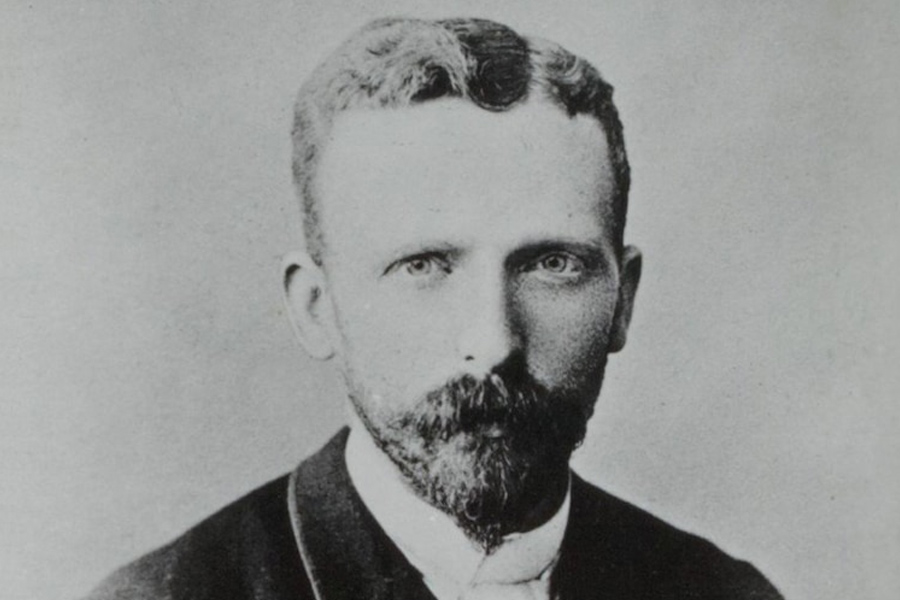
Basic Information
| Field | Details |
|---|---|
| Full name | Theodorus Van Gogh |
| Known as | Theo van Gogh |
| Born | 1 May 1857 |
| Birthplace | Groot-Zundert, North Brabant, Netherlands |
| Died | 25 January 1891 |
| Death place | Utrecht, Netherlands |
| Occupation | Art dealer |
| Employer | Goupil & Cie |
| Spouse | Johanna Gezina Bonger |
| Child | Vincent Willem van Gogh |
| Best known for | Supporting Vincent van Gogh emotionally, financially, and professionally |
A life shaped by family, art, and duty
I see Theodorus Van Gogh as one of those figures who lived in the shadow of a brighter blaze, yet helped feed the fire that made the blaze possible. He was born into a Dutch minister’s household in 1857, in the village of Groot-Zundert, and grew up inside a family ruled by faith, discipline, and close ties. His life was brief, only 33 years, but it moved through the center of art history like a hidden river under stone.
Theo is best remembered as the younger brother of Vincent van Gogh, but that simple label feels too small. He was also an art dealer, a trusted correspondent, a patron in practical clothing, and a steady witness to Vincent’s storms. In a family known for strong personalities and deep feeling, Theo became the quiet hinge on which much of the story turned.
The Van Gogh household
I think family important because Theo never lived outside it meaningfully. Protestant pastor Theodorus Van Gogh was his father. Anna Cornelia Carbentus, his mother, maintained the home. The house had religion, order, pain, and expectation. It had six living children and one stillborn son named Vincent before the renowned Vincent.
A restless constellation of siblings. The oldest surviving son, Vincent, became an artist. Anna Cornelia (Anna) followed. Lies, Elisabeth Huberta, followed. Theo followed. Wilhelmina (Wil) and Cornelis (Cor) followed him. Everyone remembered Vincent, the youngster who died before Theo was born. That fact haunts the family like a foghorn.
Theo was not famous during his lifetime, but his function in the family was vital. Vincent wrote to, trusted, and relied on him. He heard doubts before they became paintings.
Theo and Vincent, a brotherly bond with weight and heat
The relationship between Theo and Vincent stands at the center of Theo’s life. It was not a casual sibling tie. It was closer to a lifeline wound around a mast. Vincent wrote to Theo constantly, and those letters reveal a friendship, a dependence, and a shared emotional language that few brothers ever develop.
Theo supported Vincent in direct ways. He sent money. He offered advice. He encouraged him when others found him impossible. He also gave Vincent something harder to measure: belief. That belief mattered. Vincent moved through many failed paths before choosing painting seriously, and Theo stayed present through all of it. I do not think Vincent’s story makes full sense without Theo standing just offstage, holding the lantern.
At the same time, the bond was not one-sided sentiment. Theo himself lived with pressure. He had his own work, his own ambitions, and his own emotional burden. Yet he kept returning to Vincent, again and again, as if family duty and affection had fused into a single muscle.
Career in the art world
Theo entered the art trade young. In 1873, he began working for Goupil & Cie in Brussels. That was an important start. Goupil was a major art dealership, and Theo moved through it with enough skill to rise. He later worked in Paris, where the world of modern art was changing fast, almost like weather over the Seine.
I see his career as a bridge between commerce and modern taste. He was not merely selling objects. He was helping shape what a contemporary audience might see, value, and hang on a wall. He encountered important modern artists and became part of the network that carried new art into circulation. This mattered because the late nineteenth century was a time when art was breaking its old shell. Theo stood inside that break.
His work at Goupil also brought him into contact with Vincent’s artistic development. Theo understood the art market from the inside, which gave his support to Vincent a practical edge. He knew what buyers wanted, what galleries preferred, and what trends were emerging. That knowledge did not make Vincent conventional. It gave Vincent a real-world counterweight.
Marriage, home, and fatherhood
Theo married Johanna Gezina Bonger in 1889. I think this marriage is one of the most important turning points in the family story, because it brought a second powerful caretaker into the Van Gogh legacy. Jo, as she was known, would later preserve and promote Vincent’s letters and artwork with extraordinary commitment.
Their son, Vincent Willem van Gogh, was born in 1890. He arrived just before Theo’s life collapsed. That timing gives the family story a sharp, almost tragic symmetry. A child named for the famous brother inherited not only the name but the responsibility of memory.
Theo’s married life was short, but it formed a bridge from the old family narrative into the next generation. Through Jo and their son, the Van Gogh legacy did not stop with death. It sharpened.
Family members in Theo’s orbit
I notice more than names in Theo’s family. I see temperament and loyalty intertwined.
His father, Theodorus Van Gogh, was authoritative and moral. His mother, Anna Cornelia Carbentus, was the family’s emotional center. Vincent embodied hunger, genius, and hardship. Even though they lived far from art history, Anna Cornelia, Lies, Wil, and Cor were part of the family rhythm.
Johanna Gezina Bonger deserves special recognition for continuing Theo’s legacy. Vincent’s documentary trail would be thinner without her. Without her, Theo’s function may be fragmented. She preserved her sadness publicly.
Theo’s son, Vincent Willem van Gogh, continues the line. He later helped preserve the family collection, stabilizing the effort Theo had supported in its early stages.
Death and aftermath
Theo died in Utrecht in January 1891, only months after Vincent’s death. His health had broken down quickly. The timing is heartbreaking. It feels as though the two brothers were tied together by an invisible thread that tightened until it snapped twice in rapid succession.
Later, Theo’s remains were moved to Auvers-sur-Oise so he could rest beside Vincent. That burial arrangement says something powerful about the bond between them. Even in death, they were brought back together.
Extended family timeline
1857: Theo is born in Groot-Zundert.
1873: He begins working for Goupil & Cie in Brussels.
Late 1870s and 1880s: He advances in the art trade and becomes a major source of support for Vincent.
1889: He marries Johanna Gezina Bonger.
1890: Their son Vincent Willem van Gogh is born.
1891: Theo dies in Utrecht.
1914: His remains are moved to Auvers-sur-Oise beside Vincent.
1962: His son helps establish the family legacy through the Vincent van Gogh Foundation.
FAQ
Who was Theodorus Van Gogh?
Theodorus Van Gogh was a Dutch art dealer best known as Theo van Gogh, the younger brother of Vincent van Gogh. I see him as a crucial support figure in the Van Gogh family and in the history of Vincent’s career.
Was Theo van Gogh an artist himself?
No, Theo was not known as a painter or creator in the way Vincent was. His profession was art dealing, and that role gave him direct contact with the art world of Paris and beyond.
Why is Theo van Gogh important?
He matters because he supported Vincent emotionally, financially, and professionally. Without Theo, Vincent’s path would likely have been much harder and far less documented.
Who was Theo van Gogh married to?
He married Johanna Gezina Bonger in 1889. She later played a major role in preserving Vincent’s letters and reputation.
Did Theo van Gogh have children?
Yes. He had one son, Vincent Willem van Gogh, born in 1890.
What was Theo van Gogh’s relationship with Vincent like?
It was deeply close. I would describe it as a brotherhood built from affection, trust, dependence, and endurance. Their letters show a bond that was both personal and practical.
What happened to Theo van Gogh after his death?
He was first buried in Utrecht. Later, his remains were moved to Auvers-sur-Oise so he could rest beside Vincent.
What is Theo van Gogh’s legacy?
His legacy lies in the support he gave his brother, his role in the art trade, and the family memory that continued through Jo and their son. He was a steady hand in a family full of flame.
Making Westfield Cleanup Less Chaotic With The Right Dumpster
The Smart Womens Wardrobe That Works Overtime
Designing Industrial Spaces That Work As Hard As Your Equipment